
-
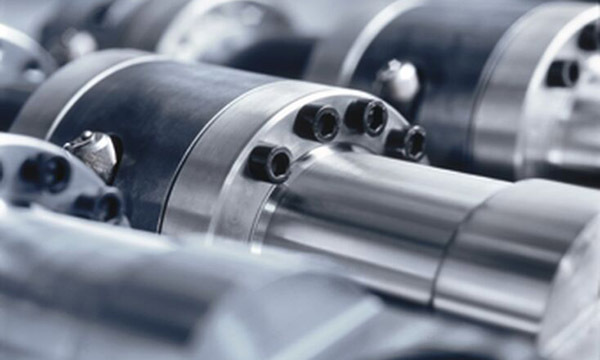
ProductsThe company specializes in the production of low-speed high-torque cycloid hydraulic motors, BZZ full hydraulic steering gear, FK combined safety valve block.
-
About UsHebei Xuke Hydraulic Machinery Co., Ltd. is located in the east of Ningjin City, Hebei Province, close to Qingyin Expressway and 308 National Highway, 50 kilometers away from 106 National Highway and Beijing-Kowloon Railway (Hengshui) in the east, 50 kilometers away from Beijing-Zhuhai Expressway and Beijing-Guangzhou Railway in the west, and 80 kilometers away from the provincial capital Shijiazhuang, the traffic is very convenient.
-
NewsWe have a modern workshop, reliable equipment, advanced production technology, committed to producing high-quality industrial products for customers. We rely on rich production experience to provide you with high-quality products and services.



Cycloid hydraulic motor working principle
The working principle of the cycloid hydraulic motor is mainly based on the principle of small tooth difference. It is a kind of internal meshing cycloid gear hydraulic motor.
The core components of such a motor include a rotor and a stator, which form a pair of cycloidal needle tooth meshing gears. The rotor has a specific number of teeth (usually 6 or 8 short-amplitude ectrochoidal equidistant line tooth profile), while the stator has a circular arc needle tooth profile with one more tooth than the rotor. This design results in a specific interdental volume between the rotor and the stator, which is divided into a high pressure zone and a low pressure zone, with half of the volume in the high pressure zone and the other half in the low pressure zone.
When hydraulic oil enters the hydraulic motor, it pushes the rotor to move between the teeth of the stator, thereby generating rotational motion. Under the action of the hydraulic torque generated by the pressure oil, the rotor rotates around the center of the stator with the eccentricity as the radius, and rotates at the same time. This rotary motion includes rotation and revolution, the direction of rotation is opposite to the turnover direction of the high-pressure oil chamber, and the revolution is carried out around the center of the stator.
During the rotation of the rotor, the oil inlet and return chambers are constantly changing, but they are always divided into two sides by the connecting line. One side enters oil, and the volume gradually increases; the other side discharges oil, and the volume gradually decreases. In this way, the oil is squeezed out and passes through the oil distribution mechanism, and finally discharged from the output end of the motor, thereby realizing the conversion of liquid pressure energy to mechanical energy.
The cycloid hydraulic motor is characterized by its high efficiency and low noise, as well as the ability to smoothly output low-speed rotation.
Key words:
Recommended News
Specific features of hydraulic motors
2024-03-12
Maintenance Procedures for Hydraulic Motors
2024-03-12
Share


Add WeChat

Add WeChat

Add WeChat


Address: Hebei Ningjin Mainland High-tech Development Zone
E-mail:
Fax:
Main Products

Online Message